
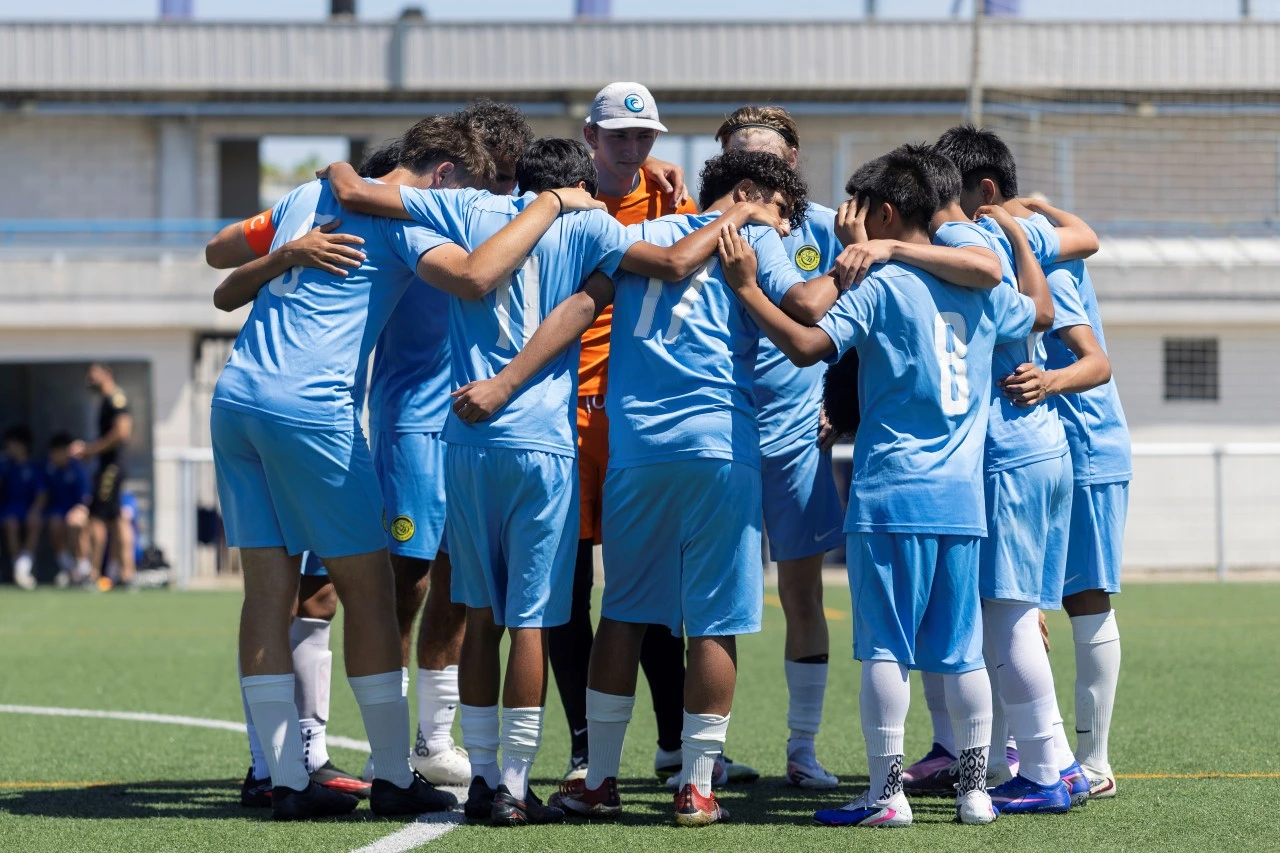
For a Latin American player, arriving in Spain does not simply mean changing countries. Even when the language feels close, the training rhythm, tactical reading, way of competing, process structure, daily life and family expectations can all change. Adaptation is not a formality. It is a central part of development.
- For a Latin American player, training in Spain can involve a significant change in tempo, tactical demands, daily structure and competitive context. Adaptation does not depend only on talent, but also on age, level, discipline, documentation, program duration and the ability to sustain performance outside the player’s usual environment. That is why a profile assessment before traveling matters.
Latin America is not one single block. A player from Mexico, Venezuela, Argentina, Colombia, Peru, Puerto Rico, Chile, Ecuador, Central America or the Caribbean may come from very different competitive, family, economic and documentation contexts. For that reason, discussing Latin American players in Europe requires nuance. The point is not to sell one generic pathway, but to understand what changes and what each case needs to review.
Why Spain attracts so many Latin American players?
Spain often appears as a natural destination for many Latin American families considering a football experience in Europe. The reasons are clear: language, football tradition, cultural connection, European visibility, competitive environment and the possibility of experiencing football immersion in a country where the sport is part of daily life.
For a Latin American player, Spain may feel closer than other European destinations. Families may imagine that adaptation will be easier because the language is shared, cultural codes feel familiar and there is a strong historical connection between Latin American football and Spanish football.
- But that closeness should not be confused with automatic ease.
Arriving in Spain means entering another structure. Training may have another rhythm. Tactical demands may be different. Daily life may require more autonomy. Internal competition may feel different. And families should understand that training in Spain does not automatically mean signing with a club, being represented or building a career in Europe.
What changes when moving from Latin American football to the Spanish environment?
There is no single “Latin American football.” There are highly structured academies, formative clubs, competitive leagues, more informal contexts, school tournaments, street football, private processes and very different realities depending on country and city.
Even so, when a Latin American player travels to Spain for football training,some relevant changes often appear.
Training tempo
The tempo can feel different from the first days. It is not only about running more or training harder. The change is in the combination of speed, order, decision-making and repetition.
In Spain, a player may find training sessions where he is asked to decide earlier, release the ball faster, orient his body better, correct tactical details and sustain intensity without becoming disorganized.
A player who had more time to think at home may notice that spaces close earlier. A player who solved situations through power or individual skill may need to play simpler. A player used to improvising may need to understand his role inside the team more clearly.
Adapting to tempo does not mean losing identity. It means learning to use your tools inside another context.
Tactical reading
Tactical reading is often one of the most important changes. Many Latin American players arrive with creativity, competitive aggression, technique or personality. But in a Spanish environment, coaches also observe positioning, space interpretation, pressing, defensive recovery, body orientation and positional understanding.
- A winger is not assessed only by dribbling. Coaches also observe whether he attacks the right space, knows when to come inside, helps defensively and understands when to pause.
- A midfielder is not assessed only by passing well. Coaches observe whether he offers passing lanes, orients his body before receiving, balances the team, accelerates at the right moment and understands what the game demands.
- A striker is not assessed only by scoring goals. Coaches observe how he pins centre-backs, presses, attacks zones, links play and competes without the ball.
A Latin American player who learns to connect creativity with tactical reading can grow significantly in Spain.
Internal competition
In a new environment, the player does not only compete against opponents. He also competes to adapt to the group, understand the dynamic, sustain performance and respond to the routine.
Internal competition can be a strong change for players who were protagonists in their home country. In Spain, they may find teammates with more tactical order, stronger training rhythm, more experience in structured development environments or a different understanding of the collective game.
- This should not be seen as a threat. It can be a development tool if the player has the maturity to learn.
The question is not only whether the player stands out from day one. The question is whether he can observe, correct, integrate and improve inside a more demanding group.
Daily discipline
Daily discipline is part of performance. Being on time, resting, taking care of the body, respecting routines, listening to feedback, living with teammates and sustaining habits off the pitch all matter.
Some players arrive with a lot of talent but limited autonomy. Others arrive with less individual flash but a better disposition to work every day. In an immersion environment, those details become visible.
For a Latin American player traveling far from family, discipline is not only sporting. It is also personal: organizing himself, communicating, managing frustration, living in residence, adapting to schedules and understanding that demands do not end when training ends.
Adaptation off the pitch
Adaptation off the pitch can directly influence performance. The player may miss his family, feel pressure because of the investment, compare himself with others, feel frustrated when he does not understand feedback or need time to feel comfortable.
- This is especially relevant for teenagers. Traveling to Spain can be a formative experience, but it also requires maturity.
Families should understand that emotional adaptation is not a minor detail. A player may have level but need a more gradual entry format. Another may be ready for a longer experience. Another may need to prepare autonomy better before traveling.
Not every profile needs the same step.
Language helps, but it does not solve everything
Sharing the language can help a lot: communication with coaches, shared living, instructions, logistics and contact with the team. For many Latin American families, this makes Spain feel like a more natural pathway than other European countries.
But speaking Spanish does not mean automatically understanding the football language of the environment.
The player may understand the words and still need time to understand:
- what the coach is asking for;
- how the team is organized;
- what playing simple really means;
- how feedback is interpreted;
- what his position demands;
- when to accelerate or pause;
- how internal competition is lived;
- which habits are considered basic.
Verbal language helps. Football adaptation is trained.
That is why the player should not arrive thinking that language solves everything. It can reduce friction, but it does not replace game reading, discipline or process.
What a Latin American player should prepare before traveling
Before traveling to Spain, the player should organize his profile and preparation. Arriving only with enthusiasm is not enough.
He should prepare:
- age and year of birth;
- nationality and documentation;
- main and secondary position;
- current club, academy or league;
- recent competitive background;
- updated video;
- football CV;
- purpose of the trip;
- date availability;
- possible duration;
- physical condition;
- level of autonomy;
- family expectations.
It also helps to review whether the player understands what he is looking for. A first immersion, adaptation assessment, one-month training experience, full-season pathway and measuring himself in a more demanding context are not the same.
- If the objective is unclear, the experience may be misread.
A Latin American player may have real qualities and still need a period of adaptation before thinking about exposure, competition or deeper pathways. That prior reading helps avoid impulsive decisions.
What parents should evaluate before investing
For a Latin American family, sending a son to Spain can be a significant decision: travel, investment, distance, documentation, accommodation, supervision and expectations.
Before moving forward, it helps to evaluate:
| Factor | What families should review |
| Age | Whether the player is at the right stage to travel |
| Level | Whether he has enough competitive base |
| Maturity | Whether he can live away from home and sustain routines |
| Documentation | Passport, visa or conditions depending on country and duration |
| Budget | Program, flight, external costs and family margin |
| Duration | Whether a short stay, medium program or full season makes sense |
| Supervision | Accommodation, support and communication |
| Objective | Whether the goal is adaptation, assessment, training or long-term process |
| Expectations | Difference between experience, exposure, representation and signing |
The investment does not buy a result. It buys a structure. And that structure only makes sense if the player can use it well.
Families should also be careful with unclear external promises. “They will see you,” “you will sign,” “you have level for Europe” or “this trip will get you discovered” are phrases that should be reviewed calmly. A serious offer should explain what it provides, what it does not provide and what depends on performance.
Difference between training, competing, exposure and signing
One of the most common confusions among Latin American families evaluating Europe is mixing different stages.
- Training in Spain means entering a work structure, receiving feedback, adapting to rhythm and living a football immersion.
- Integrating into a club environment means entering a formative or competitive dynamic depending on the program and context. It does not automatically mean signing with a club.
- Competing may mean friendlies or official competition when applicable, depending on age, documentation, duration, licensing and regulations. Not every format allows the same thing.
- Exposuremeans being in an environment where the player may be observed. It does not mean being selected.
- Signing with an agency means entering a representation relationship. It does not mean signing with a club.
- Signing with a club only happens when there is a formal agreement and specific conditions.
This distinction is not defensive. It is necessary. It helps the family understand which stage is being evaluated and what depends on the player.
Read more: Training, Competing, Exposure, and Signing Are Not the Same: A Guide for Players and Families
What duration may make sense depending on the profile
Not every Latin American player needs a full-season pathway. Not every player should stay only in a short experience either.
- Duration should respond to the profile.
- A short stay can work as a first immersion. It allows the player to understand the environment, measure initial adaptation, train at another rhythm and see how he responds outside his usual context.
- A 1 to 3 month program may make sense when more continuity is needed. It allows habits, adaptation, response to feedback, discipline and development to be observed more deeply.
- A full-season pathway may be appropriate when the player, family and objective justify a more complete process. It may allow deeper integration, continuity and competition when applicable, always depending on age, documentation, regulations and performance.
Duration should not be chosen out of anxiety. It should not be chosen because more time always sounds better. It should be chosen through assessment of the player’s profile and family context.
Read more: Which Soccer Program in Spain Fits Your Profile: 8 Days, 14 Days, 1 Month, or a Full Season?

Common mistakes when looking for a pathway in Europe
- The first mistake is believing that leaving Latin America is already progress. Traveling can be valuable, but only if the process has structure and purpose.
- The second mistake is thinking Spain will be easy because the language is shared. Language helps, but it does not remove sporting demands or tactical adaptation.
- The third mistake is choosing based on exposure promises. Being seen does not mean signing. Exposure, representation and signing are different stages.
- The fourth mistake is not reviewing documentation. Each country may have different conditions. A player from Mexico, Venezuela, Argentina, Colombia, Peru, Puerto Rico, Chile, Ecuador or Central America may face different requirements depending on passport, duration and case.
- The fifth mistake is not preparing the profile. Without a CV, video, clear position and objective, assessment loses precision.
- The sixth mistake is treating Latin America as one single context. Coming from a structured club, private academy, local league, competitive school or more informal environment is not the same.
- The seventh mistake is confusing a formative experience with a career guarantee. An immersion can provide development, assessment and adaptation. It cannot promise automatic success.
How Pro Football Training and Siello Academy can help organize the process
Pro Football Training, a platform within Siello Academy, is part of Siello Football Group, an ecosystem dedicated to the long-term development of footballers in Europe.
For Latin American players, its value is in organizing a transition that is often evaluated with anxiety: leaving the country, training in Spain, understanding the level, adapting to another structure and deciding whether it makes sense to move toward a deeper process.
The program can help:
- review the player profile;
- guide which duration may make sense;
- provide a structured immersion in Madrid;
- integrate training, residence, supervision and routine;
- expose the player to another training rhythm;
- measure adaptation in a more demanding environment;
- separate realistic expectations from external promises.
Depending on program length and player performance, that experience may open opportunities for exposure, competition and progression within the ecosystem. But the central point remains: the structure creates the environment; the player must respond with performance.
If you are coming from Latin America and evaluating training in Spain, the first step should not be looking for any opportunity. It should be reviewing your age, level, country, documentation, objective and possible duration.
FAQs
Can a Latin American player train football in Spain?
Yes, a Latin American player can train football in Spain if he meets the program requirements, minimum age, applicable documentation and entry conditions according to nationality and duration. The right pathway depends on the player’s profile.
What changes when moving from Latin American football to Spanish football?
Training rhythm, tactical reading, daily structure, internal competition, discipline, off-ball demands and the way performance is assessed may change. Life outside the pitch also changes.
Does speaking Spanish make adaptation easier?
Yes, sharing the language can reduce friction in communication, shared living and instructions. But it does not solve everything. The player still needs to adapt to football language, tempo, feedback and training structure.
What should a player prepare before traveling?
The player should prepare passport, documentation, football CV, updated video, position, competitive background, objective, availability, physical condition, autonomy level and family expectations.
Do I need a visa to train in Spain?
It depends on nationality, length of stay and the specific case. Some nationalities may have different conditions for short or long stays. Families should verify requirements with official sources and the relevant consulate.
Is a short stay or a long program better?
It depends on the profile. A short stay can work as a first immersion. A 1 to 3 month program allows more continuity. A full-season pathway may make sense when the player and family are ready for a deeper process.
Does training in Spain guarantee a club signing?
No. Training in Spain does not guarantee a club signing, contract, representation or sporting career. It can offer structure, adaptation, integration and assessment within a serious environment, but player performance remains decisive.
What parents should evaluate before investing
They should evaluate age, level, maturity, documentation, budget, accommodation, supervision, duration, real objective and expectations. They should also separate training, competition, exposure, representation and signing.
How do I know if my profile fits?
The most serious way is to review age, position, competitive level, video, recent experience, documentation, maturity, possible duration and objective. A profile assessment can help determine whether this pathway makes sense.
What mistakes should I avoid when looking for an opportunity in Europe?
Avoid buying signing promises, assuming Europe solves everything, traveling without assessment, failing to prepare a CV or video, ignoring documentation, choosing duration out of anxiety and confusing exposure with contract.
Next step: assess whether this pathway fits your profile
For a Latin American player, Spain can be a serious destination for training, adaptation and development. But it should not be understood as a shortcut. Changing countries does not replace structure, discipline, documentation, maturity or performance.
The question is not only whether you want to train in Europe. The question is whether your profile, your moment and your family context allow a serious pathway to be planned.
Request a profile assessment to understand whether this pathway fits your case..
Explore which program can help you adapt to the Spanish football environment.