
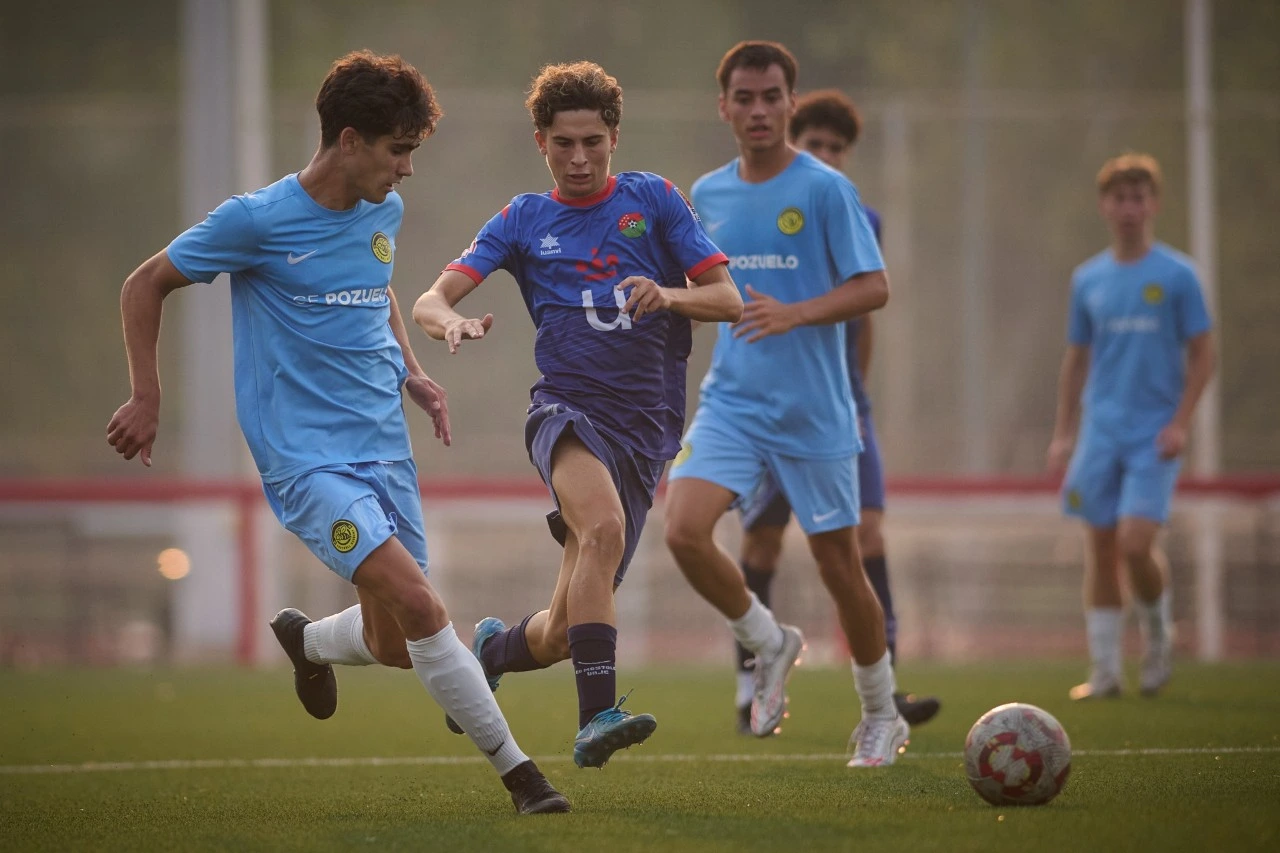
To assess the opposition in a soccer program in Spain, ask for the exact squad, age group, division and season, match format, and conditions for taking part. Check those details against official sources, then consider whether the challenge suits the player’s current level and development goals.
“You will play against a well-known club” sounds exciting. For a family planning a trip, the next questions matter: which team will take part, what will the player experience, and what can they learn from it?
A club’s reputation provides context. Understanding the squad, the proposed match and the coaching around it helps you judge the experience itself. The following questions make it easier to compare programs.

Identify the Exact Squad and Who Will Take Part
A club may have several squads within one age category, including A teams, B teams and development groups. Ask for the full club name and the specific opposing team. “Youth team” or “academy team” still leaves important details unanswered.
Check whether the opposition will be the usual squad, a mixed-age selection or a group assembled for the activity. The team’s league provides a reference point, but a friendly involving a mixed squad may present a different challenge.
Hypothetical example: a program announces a match involving “Club X.” A useful description would be: “a friendly against its Juvenil B squad, with the age group and competition identified and the match squad still to be confirmed.” That gives you something to check and shows what remains pending. This hypothetical example does not announce a confirmed opponent for any program.
Separate the Age Category from the Competition Level
In Spain, labels such as infantil, cadete and juvenil identify age categories. To compare opponents, you also need the competition, division, group and season. Two teams in the juvenil age category can play at very different levels.
For example, the Royal Spanish Football Federation (RFEF) publishes specific rules for the 2026/27 Liga Nacional Juvenil and has a dedicated División de Honor Juvenil section. Asking only whether the opponent is a “youth team” leaves the actual competition unidentified.
Ask which birth years are expected and how the match will be adapted to the player’s profile. Age, physical maturity and competitive experience help explain the challenge, although none measures team quality on its own. For more background, read the guide to youth football age groups in Spain.

Clarify the Activity and Playing Format
The word “game” can describe several experiences. Check both the type of activity and the playing conditions:
- Opposed training or an internal game: ask who makes up the teams, what the session is designed to work on, and whether it uses modified rules or pitch dimensions.
- Friendly against another team: identify the opposing squad, whether the game is 11-a-side, 7-a-side or another format, its duration, and how substitutions will work.
- Tournament or showcase: ask for the organizer, rules and confirmed teams. The event’s name alone does not establish who will attend to watch players.
- Official competition: check the competition and the applicable registration and eligibility requirements. Match selection and playing time are separate coaching decisions from eligibility to compete.
Training within a club also needs a clear description: which group, for how long and in which sessions. For the administrative side, see the guide to player registration and official competition in Spain.
How to Check the Opposition Through Official Sources
Once you have an exact team reference, follow these steps. If the program mentions a past fixture, note the date so you can judge how recent and relevant the example is:
- Find the squad: look for its exact name on the club’s official website or the relevant federation portal. Check the team’s letter or designation and its age category.
- Select the season: confirm the competition, division and group for the season covering your stay. Avoid using an old league table to describe the current team.
- Review fixtures and results: these place the team within its competition. A league position or a single score needs context and cannot explain the full challenge.
- Confirm the proposed activity: ask the program which squad and players are expected to take part. A team’s league record does not establish the lineup for a future friendly.
For national competitions, the RFEF provides División de Honor Juvenil information. If the opponent competes in Madrid, the Royal Madrid Football Federation (RFFM) has a fixtures and results search. For another region, use the relevant regional federation.
A private academy group or a one-off selection may not have its own federation league record. In that case, ask the organizer for verifiable details about the players’ ages, competitive backgrounds and the proposed playing format.
Check Dates, Playing Time and Possible Changes
Preseason, a league break or a busy competition week may affect squad selection and the purpose of a game. Ask whether the date is confirmed or provisional, what the activity depends on, and when you will receive confirmation.
Before booking, request written details of what the program includes, how participation is decided, and what happens if an opponent changes or a game is canceled. Distinguish the full match duration from the playing time planned for each player. Where selection depends on coaching decisions, ask about the criteria.
A Checklist for Comparing Opponents and Match Experiences
Mark unconfirmed details as pending and agree when they can be updated. This helps you compare what each proposal offers the player.
Scroll horizontally to view the full table.
| What to compare | What to ask | Why it matters |
|---|---|---|
| Club and squad | Which club and exact team? | Identifies the specific opposition. |
| Age group | Which birth years are expected? | Helps assess the physical and competitive challenge. |
| Competition | Which division and group does the team play in, and for which season? | Places the team within its competition. |
| Players taking part | Will the usual squad or a mixed group take part? | Clarifies who would actually play. |
| Activity and format | Will it be a friendly, a training session or an official match? 11-a-side, 7-a-side or another format? | Explains how the activity will work. |
| Duration and playing time | How long is the game? How are squad selection and playing time decided? | Distinguishes match duration from your individual playing time. |
| Date | Is the date confirmed or provisional? | Helps you plan your stay. |
| Development goal | What will be worked on or assessed? | Connects the game to your progress. |
| Assessment and feedback | Who assesses me, and what feedback will I receive? | Helps turn the experience into learning. |
| Conditions and changes | What is included, and what alternative is offered if plans change? | Clarifies the scope of the proposal. |
Consider What the Opponent Can Add to Your Development
Once you have identified the team, explain your goals to the coaching staff and ask how the match relates to them. A suitable opponent should help you test specific parts of your game.
These questions can guide your conversation with the coach:
- Receiving and decision-making: can you scan before receiving and make good choices as pressure increases?
- Off-the-ball play: can you offer support, maintain your position and recognize when to move?
- Transitions: do you respond quickly enough after losing or regaining possession?
- Applying feedback: can you use a coaching point from training during a game?
Ask for examples relevant to your position and feedback that sets priorities for further training. The score tells you something about the team. To assess your own experience, you also need to understand your actions, the difficulties you faced and the adjustments you made. This is part of adapting to a Spanish football environment.
What If the Opponent Has Not Been Confirmed Yet?
A future schedule may contain provisional activities. Ask for the expected opponent profile, type of game, participation conditions and a date for an update. A match from a previous program can illustrate a past experience; check whether its conditions are comparable to your proposed stay.
If a particular activity is central to your decision, clarify the program’s specific commitment and how a change would be handled before booking. Look more closely at a proposal that only shows club badges, leaves out the squad, or presents a pending activity as confirmed.
If observation by clubs or football professionals is mentioned, ask who would attend and in what role. Taking part or being watched may contribute to an assessment. Agency representation and signing with a club each require their own agreements.
Choose a Program Around Your Profile and Goals
Start the conversation with your details: age, position, current team or competition, experience and goals for the stay. Use that information to ask which type of opposition and coaching support would suit you, then compare the answers using the checklist above.
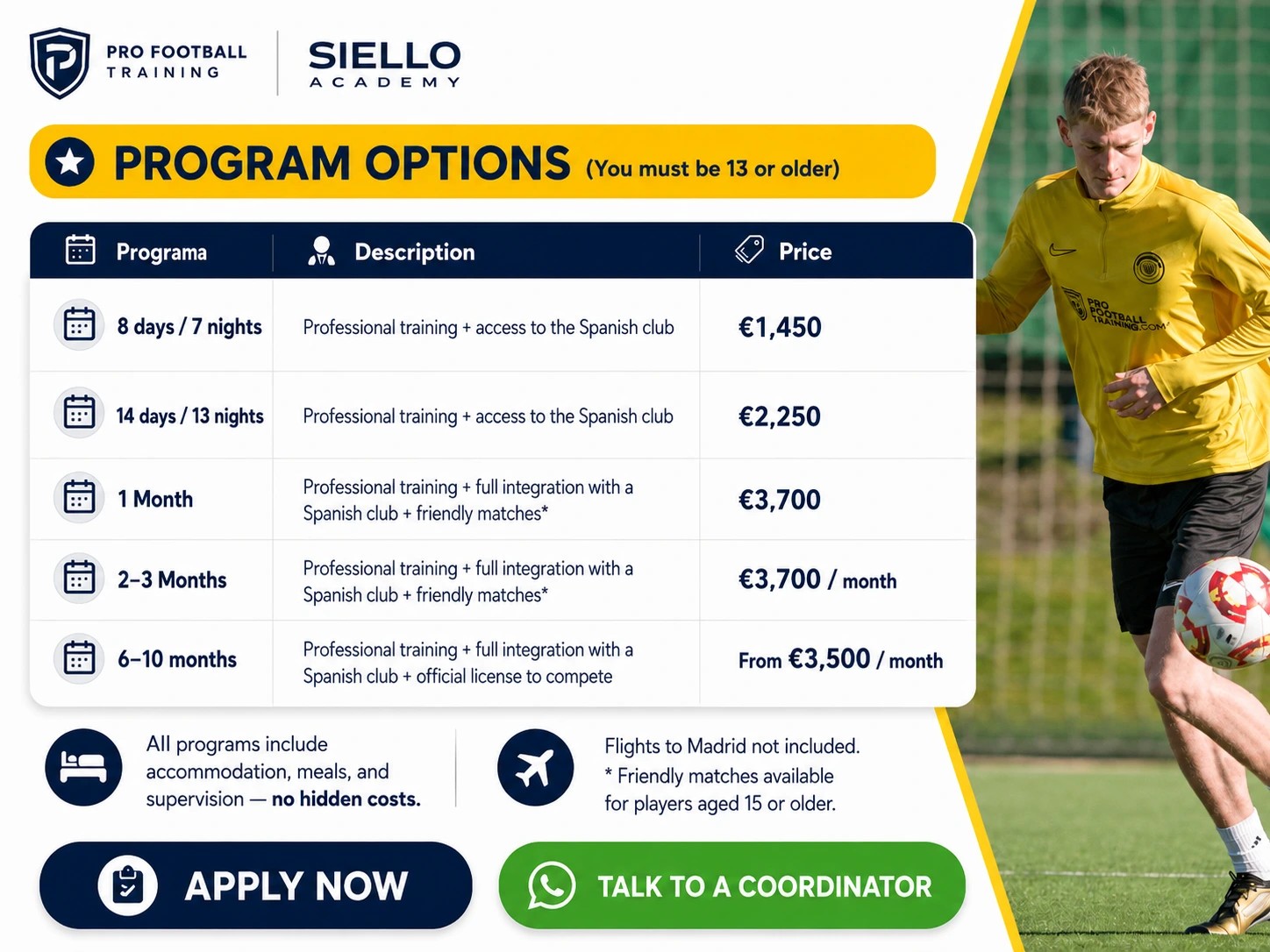
For a short stay in Spain, explore Pro Football Training’s options and ask how your profile fits. If you are considering a pathway of three months or more, request information from Siello Academy. Share your dates and ask which activities are planned for your age, level and program duration.
FAQs
Does Playing Against a Well-Known Club Guarantee a High Level?
The club name provides context, but you need the exact squad, its competition, the expected players and the playing format. One club may have several teams in an age category and use different groups for a friendly.
Where Can I Check the Opponent’s Age Category and Division?
Use the club’s official website and the RFEF or relevant regional federation portal. Select the season and look for the exact team name, division and group. Then confirm with the program who would take part in the proposed game.
Is a Friendly the Same as Official Competition in Spain?
No. A friendly and official competition are different activities. Official competition requires the applicable registration and eligibility conditions to be met. Being eligible does not by itself determine match selection or the minutes awarded by the coaching staff.
What Should Be Clear Before I Book a Soccer Program?
Which activities are included, what is confirmed or pending, how participation is decided, and what happens if the schedule changes. If an opponent is not confirmed yet, ask for the expected profile and when that information will be updated.