
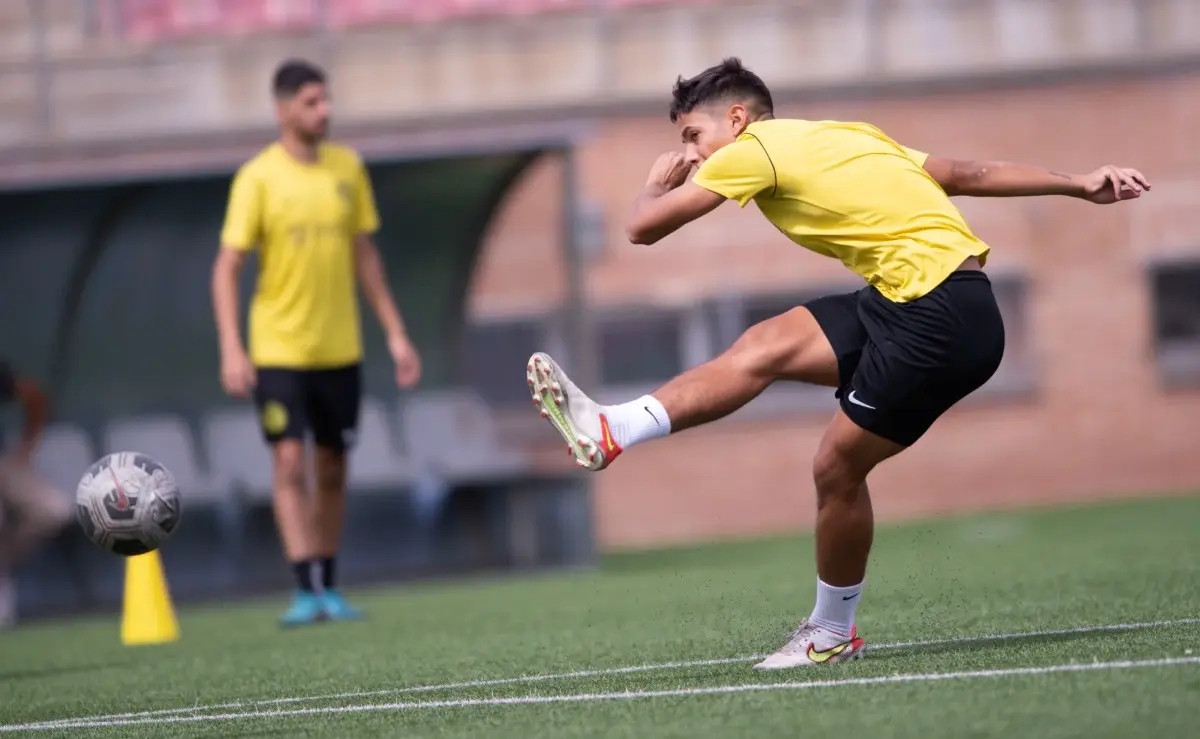
In recent years, a quiet phenomenon has begun to be noticed in training camps, airports, and academies across the ocean: more and more young footballers from Argentina and Puerto Rico are traveling to Europe to train, develop their skills and take a more decisive step towards their football future.
What once seemed reserved for a select few exceptional talents has now become a real, concrete, and accessible strategy for many families seeking a clearer path for their children. But..
What changed? Why did Europe become so attractive? And what do they find there that isn't always available in Latin America?
This article seeks to answer these questions with honesty, context, and sensitivity, to help you understand if this global movement could also make sense for your family or your career.
How to train in football in Spain: Requirements, levels, and steps for international youth players
Whether you live in Latin America or the United States, the process of applying to a Spanish academy can feel challenging at first, but with the right information, everything starts to fall into place.
A growing trend: why so many young people are traveling to Europe
Latin American football has always been recognized for its natural talent, creativity, and ability to produce elite players. However, the trend of migrating to Europe at increasingly younger ages is linked to profound transformations in how talent is developed.
Changes in global football training
Europe consolidated a model where:
- The training structure is standardized from an early age.
- The categories have clear objectives for technical and tactical development.
- Technical staff are usually trained under national criteria (such as UEFA B, A or Pro).
These are not theoretical advantages: they are practical ones that give coherence to the player's training journey.
The influence of Latin American role models
Since the 2000s, players like Messi, Agüero, Guardado, Jiménez or Araujo have shown how training and consolidation in Europe can accelerate and enhance entire careers.
Young people don't just watch games: they see stories that resemble their own... and they realize that this path exists, and it's open.
What do players from Argentina and Puerto Rico find in Europe?
The short answer: method, structure and opportunity.
The long answer deserves nuance.
More structured training methodologies
European academies work with programs based on:
- technical progressions,
- defined tactical sessions,
- individual player analysis,
- planned physical training,
- emotional and habit work.
UEFA and many national federations emphasize that the holistic development of the player is not limited to the field: it includes mentality, discipline and understanding of the game.
Technical and tactical development from an early age
In Europe, even at educational levels, the following are prioritized:
- decision making under pressure,
- positional play,
- tactical reading,
- adaptability,
- mental speed.
This is reflected in daily training and the overall routine.
Competitive and professional environments
Internal competition is usually high. Not from a hostile environment, but from a collective standard where everyone seeks to grow..
For many Latin American players, this leap is a catalyst for evolution.
Factors driving this movement
The decision to travel to Europe is not just about football: it is also strategic and emotional.
Greater exposure to scouts and scouting networks
Europe functions as a meeting point for clubs, representatives and youth programs.
The more minutes a player is on that radar, the greater the probability of being seen, recommended, or evaluated.
Infrastructure and technology applied to training
From optimally maintained fields to video analysis tools, GPS and individualized training, Europe has created an ecosystem where talent development is a constant investment
A football culture that promotes discipline and learning
In many European countries, order and consistency are core values.
That, combined with Latin talent, usually yields excellent results when there is adequate support.
Differences between training in Latin America and training in Europe
No system is better or worse: they are simply different. The important thing is to understand how these differences impact a young person's development.
Game rhythm and daily demands
Europe works with more intense and controlled rhythms, even in youth categories..
The Latin American player brings creativity, but often needs to adjust his timing, location, and its game reading.l
Access to specialized technical bodies
Coaches in Europe are usually professionalized under licensing standards. This better structures the player's training plan.
Clearer and more competitive category structures
While some youth leagues in Latin America may have organizational irregularities, in Europe the schedules, categories and progressions are uniform.
Living and training in football in Spain:
Real costs, adaptation and key factors for young international players
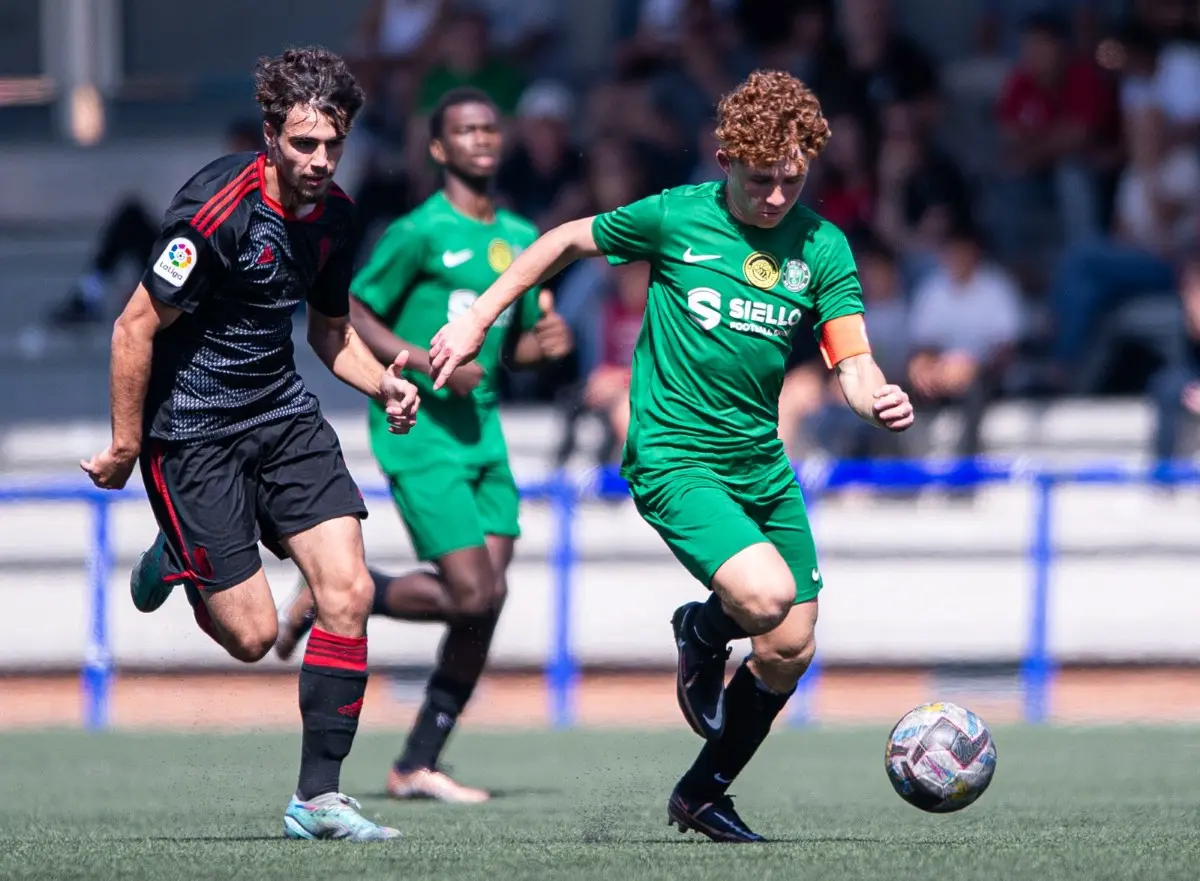
What families should consider before deciding
The journey is not just about football: it is also emotional, educational and economic.
Ideal age for traveling
While there is no single correct age, many experts agree that:
- 13–15 years → ideal stage for technical-tactical adjustment.
- 16–18 years → key moment for competitiveness and projection.
- 18–20+ years → semi-professional level search.
The most important thing is not age, but theemotional maturityof the player. madurez emocional del jugador.
Emotional and cultural adaptation
Young people must be prepared to:
- living with other players,
- managing nostalgia,
- adapt to new rules and routines,
- communicate in different environments.
Each family should assess whether their child is ready for this.
Realistic expectations
Training in Europe does not guarantee contracts, immediate visibility, or rapid promotions.
Yes, it guarantees a professional environment where a committed player can develop deeply.
Is Europe the right path for every player?
Not all young people are ready for this leap, and that's okay. There are signs that can guide you:
Signs of readiness
- genuine motivation,
- self-management capacity,
- constant discipline,
- openness to learning,
- emotional intelligence to adapt.
If it's not the right time yet
There are intermediate steps:
- more intensive training in the country of origin,
- short experiences abroad,
- Guided physical and mental preparation,
- progressive support to assess maturity.
Do you want to explore this possibility?
A good start is an initial assessment of the football profile: to know strengths, areas to work on and approximate level.
This helps the family make an informed decision, with realistic expectations and a clear vision of the possible path forward.
Europe is not a "magical" destination: it is a structured, demanding and profoundly formative context.
And for many young Latin Americans, it is the space where their passion is organized, grows, and finds new possibilities.
Europa no es un destino “mágico”: es un contexto estructurado, exigente y profundamente formativo.
Y para muchos jóvenes latinoamericanos, es el espacio donde su pasión se ordena, crece y encuentra nuevas posibilidades.
