
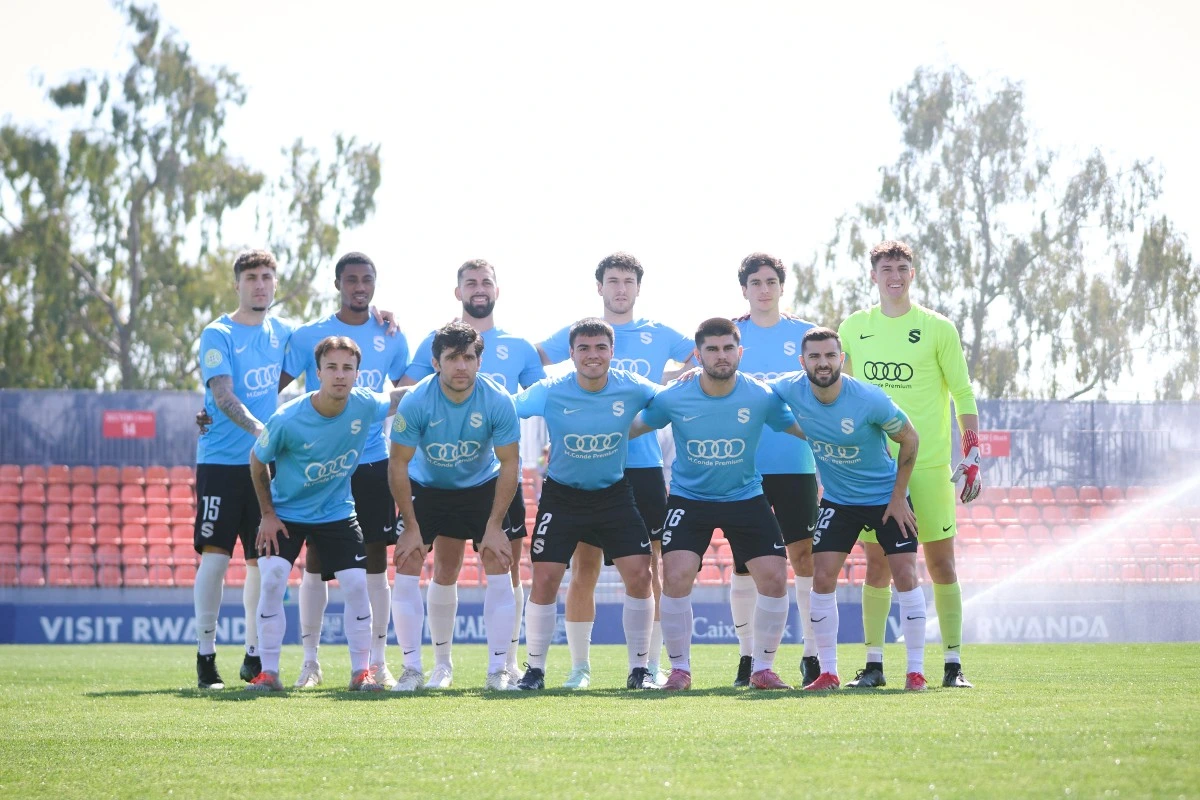
For families in North America and Latin America with young football prospects, a critical moment arrives around the age of 16 or 17: making the big decision about the player’s future.
On the table, the two great global options usually appear: seeking a university scholarship in the United States College Soccer system (NCAA / NAIA) or investing in a high-performance academy in Europe.
Both routes require a significant investment of time, effort, and family money, but they lead to completely different destinations. Choosing the wrong option due to a lack of information often results in athletic or academic frustration.
In this article we offer an honest comparison, without myths, so that you and your child can decide which environment is right for their real goals.
The United States Model (College Soccer): Education First
The American university system is undoubtedly the best platform in the world to combine a prestigious academic degree with competitive sports. Universities feature top-tier facilities, incredible stadiums, and a safe environment.
However, if your son’s primary goal is to sign a professional football contract, the US university system presents three significant structural barriers:
- The biological clock (Draft age): In Europe, a player debuts in professional football at 17 or 18 years old. In the US college system, players typically enter the MLS Draft at 22 or 23 years old. For the European market, a 22-year-old talent who has never played professional football is already considered «late.»
- Short seasons: The NCAA regular season lasts only a few months (usually from August to November). An elite player needs to compete 10 months a year to maintain their rhythm, something College Soccer does not allow due to its regulatory restrictions.
- The tactical level: College soccer is extremely athletic and physical, but in terms of tactical understanding and decision-making, it is several steps below the European rigor.
The European Model: Early Immersion and Professionalism
Europe is not the place to go to try your luck; it is the cradle of world football. The focus here is not recreational; it is purely professional. Entering a high-performance academy in Spain means immersing oneself in the same routine experienced by youth players at Real Madrid or Atlético de Madrid.
The advantages of the European route for those seeking professionalism are clear:
- Early exposure: In Spain, players compete against adults or in elite youth divisions from the age of 17. The player is exposed to the radar of real scouts much earlier.
- Year-round competition: The federated league calendar in Spain runs from September to May, with demanding preseasons in August. That’s 10 months of football at the highest level.
- Tactical culture: In Europe, players are taught to think. The player learns to solve problems in tight spaces, position their body correctly, and play in one or two touches—non-negotiable skills for being a professional today.
Honest Comparison: What is the player really looking for?
The decision comes down to answering a family question with complete honesty:
- If the goal is to secure a university degree using football as a tool to finance part of the studies and live a great formative experience: College Soccer in the US is the right decision.
- If the number one goal is to become a professional footballer, reach maximum athletic potential, understand the game, and enter the global market: Europe is the only path.
The Bridge to Europe: The Siello Academy Proposal
At Siello Academy, we understand parents’ concerns about sending their child to Spain. Many fear that prioritizing football means abandoning their studies or being left adrift. That is why we have created a structure that protects both the player’s performance and their future.
Our high-performance football academy in Madrid allows the player to train in double sessions and compete in federated leagues, while balancing their routine with online studies (High School or distance University), under 24/7 supervision.
We know this is a significant commitment. Unlike many programs on the market, by paying for and completing the full season, Siello does guarantee signing with its representation agency. It also ensures playing minutes in writing and guarantees trials with partner clubs.
Siello’s job is to put the player on the right stage; the player’s job is to perform on the pitch.
FAQ
If my child goes to Europe, do they lose their NCAA eligibility in the US?
This is a very common doubt. Training at a private academy in Europe and playing in formative/amateur leagues does not automatically eliminate NCAA eligibility, as long as the player has not signed a paid professional contract or hired an agent in a way that violates US amateurism rules. We provide case-by-case guidance to protect their options.
Is it possible to study at a university while at the academy in Madrid?
Absolutely. Our residence’s structure includes mandatory study times. Many of our players pursue their high school or university degrees remotely (online) with institutions from their home countries or international platforms.
Does Siello Academy offer full scholarships like in the United States?
No. Unlike the American university system (where universities are funded and can offer scholarships), the European high-performance ecosystem is a private environment. Our programs require investment from families to sustain the entire UEFA structure (residence, coaching staff, insurance, and competition).
At what age is it recommended to go to Spain?
If the goal is development for the professional leap, the ideal window for international immersion is between 16 and 21 years old. The earlier the player adapts to the European tactical pace, the better their chances.
If, after analyzing both options, you and your family are clear that the main goal is to reach professional football through European development, it is time to structure a serious plan.
Pro Football Training is not for everyone; it is an investment program designed for young players who have the talent and families who have the backing to support them. Contact us directly via WhatsApp for personalized family advice.