
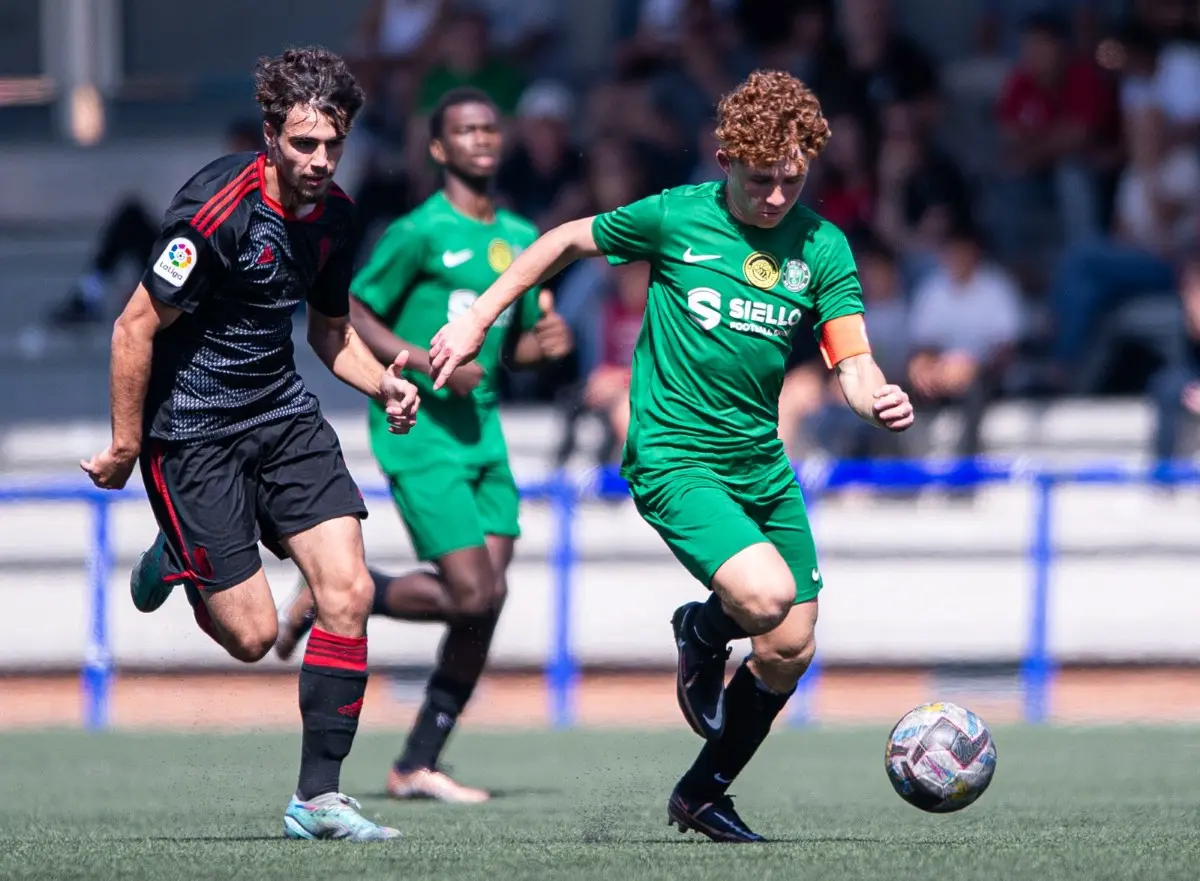
For many young footballers, living and training in Spain is a life-changing experience, both on and off the pitch. Spain not only boasts one of the most competitive leagues in the world, but also a deep-rooted football culture, robust development systems, and a unique way of experiencing the game.
However, taking this step involves more than choosing a program or academy. It also requires understanding what daily life is like, how much it really costs, and what emotional and cultural challenges may arise.
This article is intended for families of United States, Argentina, Puerto Rico and other countries who seek clarity before making such an important decision.
How to train in football in Spain: Requirements, levels, and steps for international youth players
Whether you live in Latin America or the United States, the process of applying to a Spanish academy can feel challenging at first, but with the right information, everything starts to fall into place.
What does it mean to live in Spain while coaching football?
Living in Spain as an international player means entering a structured rhythm that combines sport, community, and personal growth.
It's not "a football holiday"; it's real life in a demanding environment, with set schedules and specific responsibilities.
Daily routine at an academy or club
Although it varies depending on the institution, the most common structure is like this:
- Morning or afternoon training (1.5 to 2 hours daily)
- Gym or complementary physical work
- Technical-tactical analysis according to category
- Defined schedules for studying, resting, and meals
- Weekly league matches and friendlies
Spain, like many European youth academies, prioritizes decision-making, ball control, technique under pressure, and team play.
What is it like living with other players?
Players usually live in:
- Sports residences
- Host families
Living together is one of the greatest factors in maturation: sharing space, different cultures, habits and responsibilities accelerates personal growth.
Real costs that families should consider
One of the most sensitive—and most sought-after—issues is the real cost. To respect your guideline of not making up figures, we will talk about ranges and factors that influence the budget.
Sports housing or residence
Costs depend on:
- Cities (Madrid and Barcelona are usually more expensive)
- Type of accommodation (residence vs. host family)
- Services included (food, laundry, transport)
Public data on the cost of living in Spain (INE, Eurostat, Numbeo) show that Large cities have significantly higher costs than medium-sized cities. This directly impacts any player's monthly budget.
Food, transportation and basic expenses
to consider:
- Sports nutrition
- Mobile telephony
- Telefonía móvil
- School supplies (if the player continues their studies)
- Social or personal activities
The cost of transportation and food varies depending on the city and the player's habits, but in general it is affordable compared to large cities in the United States or Mexico.
Training, equipment and sports gear
It depends on:
- The chosen program
- Number of sessions per week
- Need for additional equipment (boots, official clothing, thermal clothing)
It is important to consider that the training pace in Spain can increase wear and tear on equipment, so it is usually replaced more frequently than in recreational programs.
Travel expenses and documentation
A CV without video makes evaluation slower. Include:
- Airfare
- Travel insurance or health insurance
- Documentation according to program duration
For short stays, most young people enter as tourists. For longer stays, arrangements may need to be made.targeteddepending on the country of origin.
Emotional and cultural adaptation of the player
Training in Spain can be one of the most valuable experiences in a young person's life… but also one of the most intense. Emotional adjustment is a critical point that families must consider.
The first month: most common changes
It is common for the player to experience:
- Nostalgia or missing family
- Physical fatigue due to the new pace
- Language adaptation period
- New social dynamics
This first stage is usually the most challenging… and also the one that marks the most rapid growth.
How language and communication influence adaptation
For those coming from the United States, the process varies: although most Spanish coaching staff understand basic English, the adaptation is usually smoother when the player has an A2/B1 level to communicate in everyday environments.
Family support and helpful habits
What helps most in this process:
- Maintain regular video calls without overprotecting
- Establish stable routines for rest, eating, and studying
- Emotionally validate the experience without minimizing the challenges
What's it like to train in Spain as a foreigner?
Each player brings their own footballing history. Spain contributes a very defined context: method, rhythm, culture, and high standards.
Pace, intensity and training style
The Spanish system is characterized by:
- High intensity in confined spaces
- Individual technical approach
- Tactical work in line with European models
- Constant corrections from the coaching staff
The RFEF and European youth programs place strong emphasis on the decision-making and game intelligence, which requires the player to think faster and act with precision.
What do Spanish coaches value?
- Modesty
- Constancy
- Game reading
- Adaptability
- Competitive attitude, without arrogance
In Spain, it is valued so much how you play and how you behave.

Tips for a smoother transition
Preparation before the trip
- Increase training intensity 4–6 weeks before
- Sleep well and maintain healthy routines
- Perform basic medical tests
Realistic expectations for players and parents
It's normal:
- Not standing out in the first few weeks
- Feeling lost in the European rhythm
- Having emotional ups and downs
Remember, progress is not linear.
Signs of good adaptation
- Player gets involved in the group
- Eat and sleep well
- Show curiosity to learn
- Rediscover the joy of playing
Is this the right time to train in Spain?
Not all players are ready at the same time. Some key signs:
- Self-motivation (not imposed by parents)
- Self-care capacity
- Good level of autonomy
- Maturity to live far from home
If some of these elements are missing, it may be helpful to prepare the ground before traveling.
Do you want to explore this possibility?
A good way to start is to talk to professionals or conduct an initial assessment of the player profileIt rdoesn't commit you to anything and helps clarify if this is the right path, when to take it, and with what expectations.
In Spain, the combination of football training and personal growth can be transformative. The important thing is to take the step with accurate information and the right support.